Finding the prostate
Where the prostate actually is, in centimetres. Why your own finger reaches the lower half of it and usually not the rest, which positions change the angle, what a curved tool is for, and every claim marked as evidenced, experiential or folklore.
Most guides say two inches in, toward the belly, and stop there as if that were an address. It is roughly right and it is the least useful thing to know, because the reason people fail to find the prostate is almost never depth. It is angle, tension, and expecting a gland behind a wall to feel like a button.
This guide gives you the map with distances on it, shows why your own finger reaches the lower half of the gland and usually not the upper half, walks through five positions and what each does to the angle, and explains what curved tools are actually for. It is written for someone who has never done this, or who has tried and found nothing. It is anatomically explicit, because anything less would send you to the wrong place.
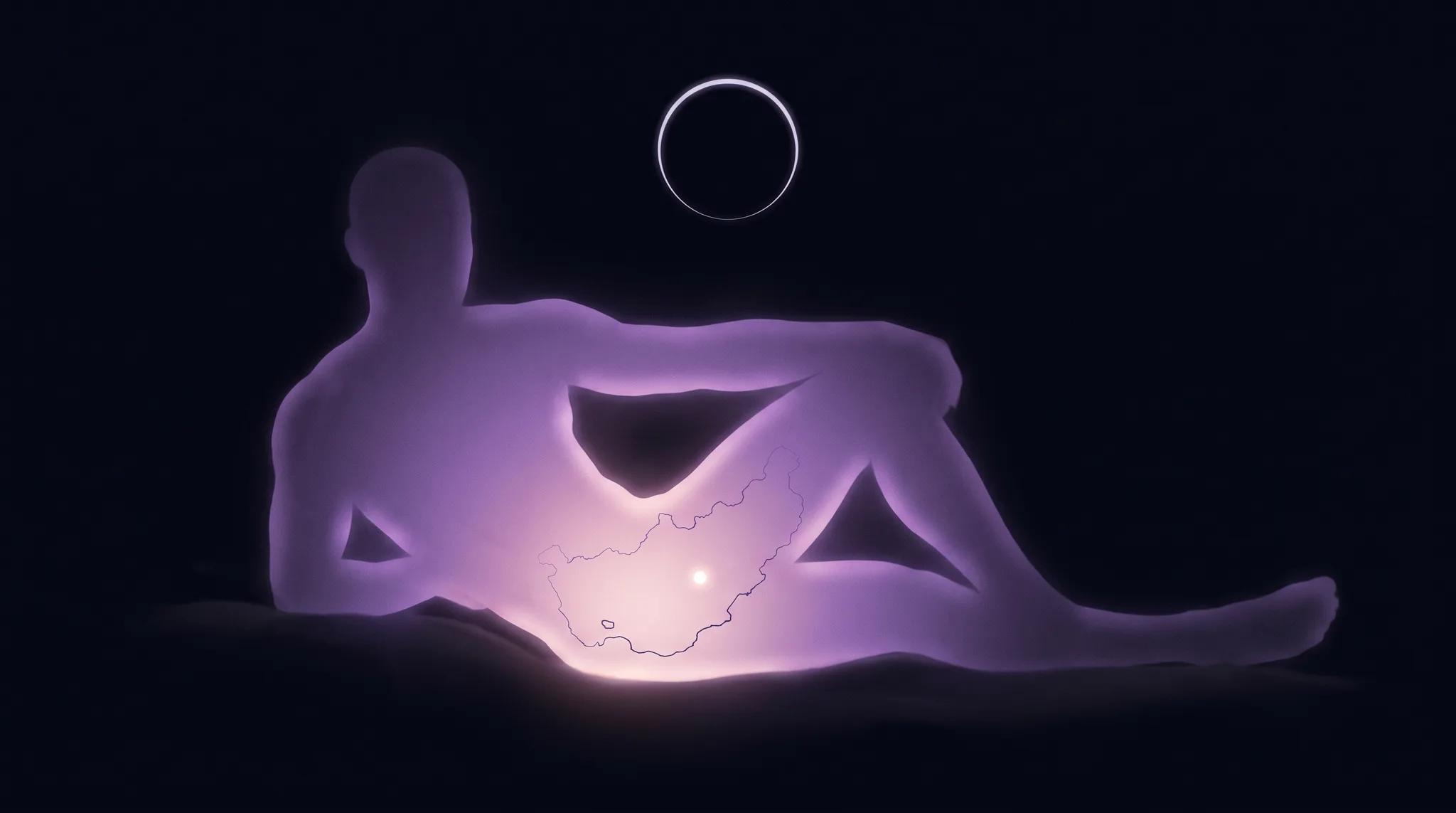
Where it is, in centimetres
The prostate sits under the bladder and in front of the lowest part of the rectum, with the urethra running through it. You reach it through the front wall of the rectum: the back of the gland presses against that wall, and a finger curled forward presses the wall against the gland. There is no opening onto it and nothing to enter. You are pressing on one organ through the wall of another. A normal adult prostate weighs about 20 grams, roughly the size of a walnut, and stays that size unless benign enlargement develops, which about half of men have by their fifties. Evidenced
In a series of 95 men measured by ultrasound, the lower tip of the gland was a median 5 cm in from the anus, and the upper end a median 10.3 cm. Evidenced The ranges were wide: 3 to 7.5 cm for the tip, 7.3 to 15.7 cm for the far end. Those men were in their sixties on average, so in a younger, smaller gland the far end usually sits nearer. The lower tip is the number to remember, because it is set by the length of the anal canal and the height of the pelvic floor rather than by the size of the gland: about five.
Loading the atlas
The bend, not the depth
The path is not straight, and this matters more than depth. The anal canal is three to four centimetres long and runs up and slightly forward. At its top the rectum bends to follow the hollow of the sacrum, up and backward toward the spine. Evidenced Push straight in past the canal and you are following the rectum toward your spine, with the gland behind you, toward your front. Curl the finger forward instead, toward the navel, and the fingertip lands on the front wall exactly where the gland is. Every description that says "toward the belly" is describing this bend, usually without knowing it.
What your finger feels
Your fingertip is the most sensitive touch instrument you own, and it will feel the gland distinctly once it is on it. A normal prostate feels smooth, firm and rubbery, about 3.5 cm across, bulging about a centimetre into the rectum, with a shallow groove down the middle that divides it into two lobes. Evidenced Firmer than the soft, yielding rectal wall around it; softer than the pubic bone farther forward. Doctors learning the exam are told to compare the texture to the tip of the nose. If what you feel is hard and unyielding you are on bone and too far forward. If everything feels the same, you are probably too deep and pressing the back wall.
What the rest of you feels
Almost nothing distinct, at first, and that is not a failure. The rectum above the anal canal, and the prostate itself, are supplied by visceral nerves, the kind that serve internal organs. They report stretch and pressure well and fine touch poorly, and they refer what they feel to other places. Evidenced Visceral sensation is diffuse and slow. It arrives as pressure, fullness, warmth or an urge, and often somewhere other than the point of contact: the perineum, the lower belly, the inner thighs. So your finger says "there it is" while your body says "something, somewhere, vaguely". Both are correct, and the second one is what you are here to learn to read.
The most common first sensation is an urge to urinate, because the upper end of the gland sits directly against the neck of the bladder. Evidenced It usually passes within a minute or two if you stay still, and emptying your bladder beforehand makes it much easier to ignore. Experiential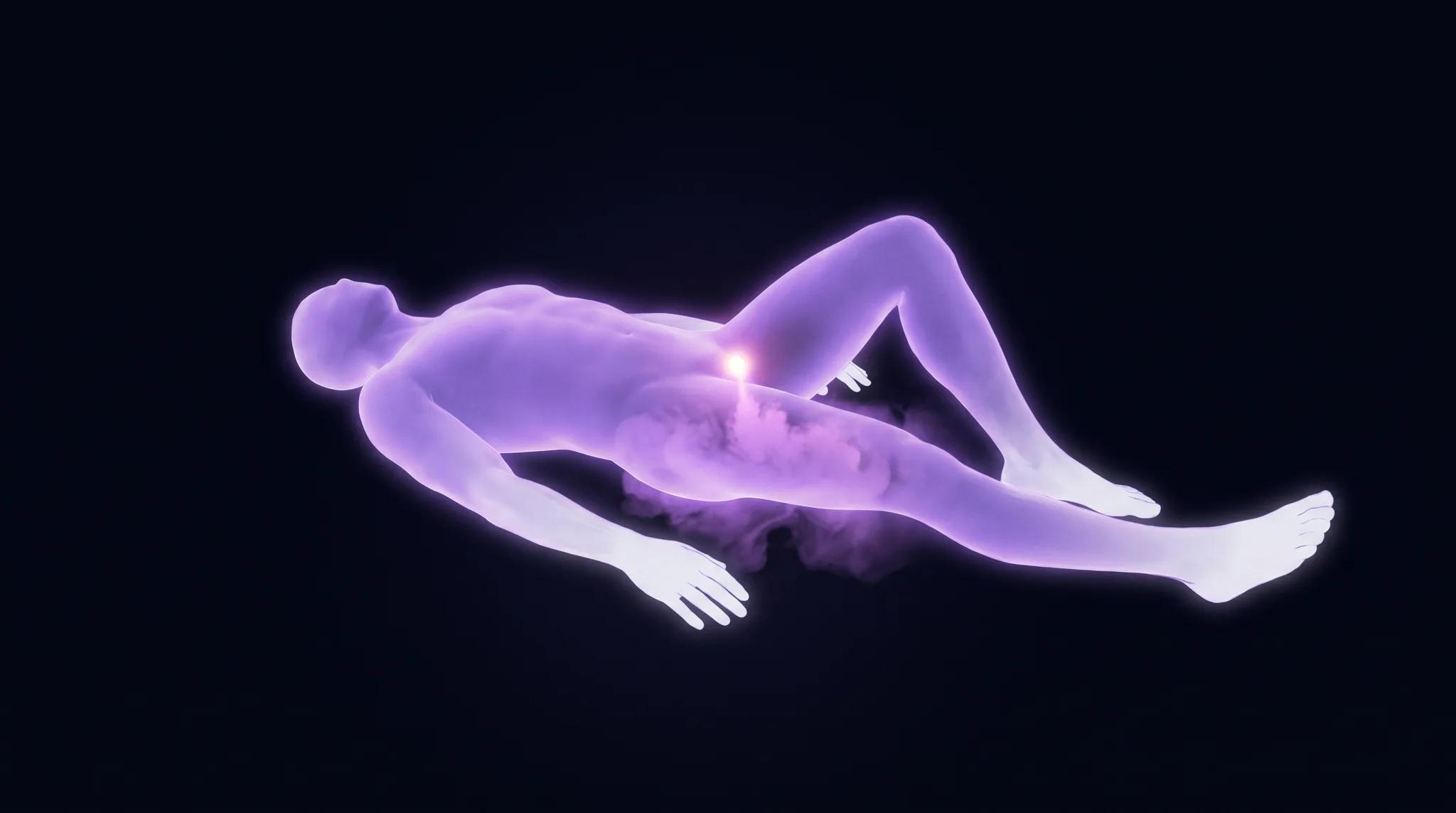
Why your finger reaches half of it
Reach, in 95 men
EvidencedHow far the examiners got
Urologists with index fingers of 7 to 9 cm, median 8.25, examining from the ideal angle. Each rung is a point on the gland; the bar is how many of the 95 men they reached it in. Depths are along the path a finger takes, from the anus.
- 10.3 cm
The whole gland
3% of men - 8.98 cm
Three quarters of it
23% of men - 8.25 cm
A median index finger, 8.25 cm, ends here
- 7.65 cm
Half of it
66% of men - 5 cm
The lower tip
94% of men
The study that measured the gland measured the examiners too. Their index fingers were 7 to 9 cm long, median 8.25. With those fingers they reached the lower tip of the gland in 94% of men, half of it in 66%, three quarters in 23%, and the whole gland in 3%. Evidenced These were urologists, examining from the ideal angle, on men who had been asked to relax. Reaching your own body, with a bent wrist and a shoulder near the end of its range, you will do somewhat worse. That is geometry, not technique, and it is the entire reason curved tools exist.
Two things move the numbers in your favour. Position, which changes the angle your arm can make and how the pelvis presents the gland. And release, because the door is held by a muscle you do not control.
The door
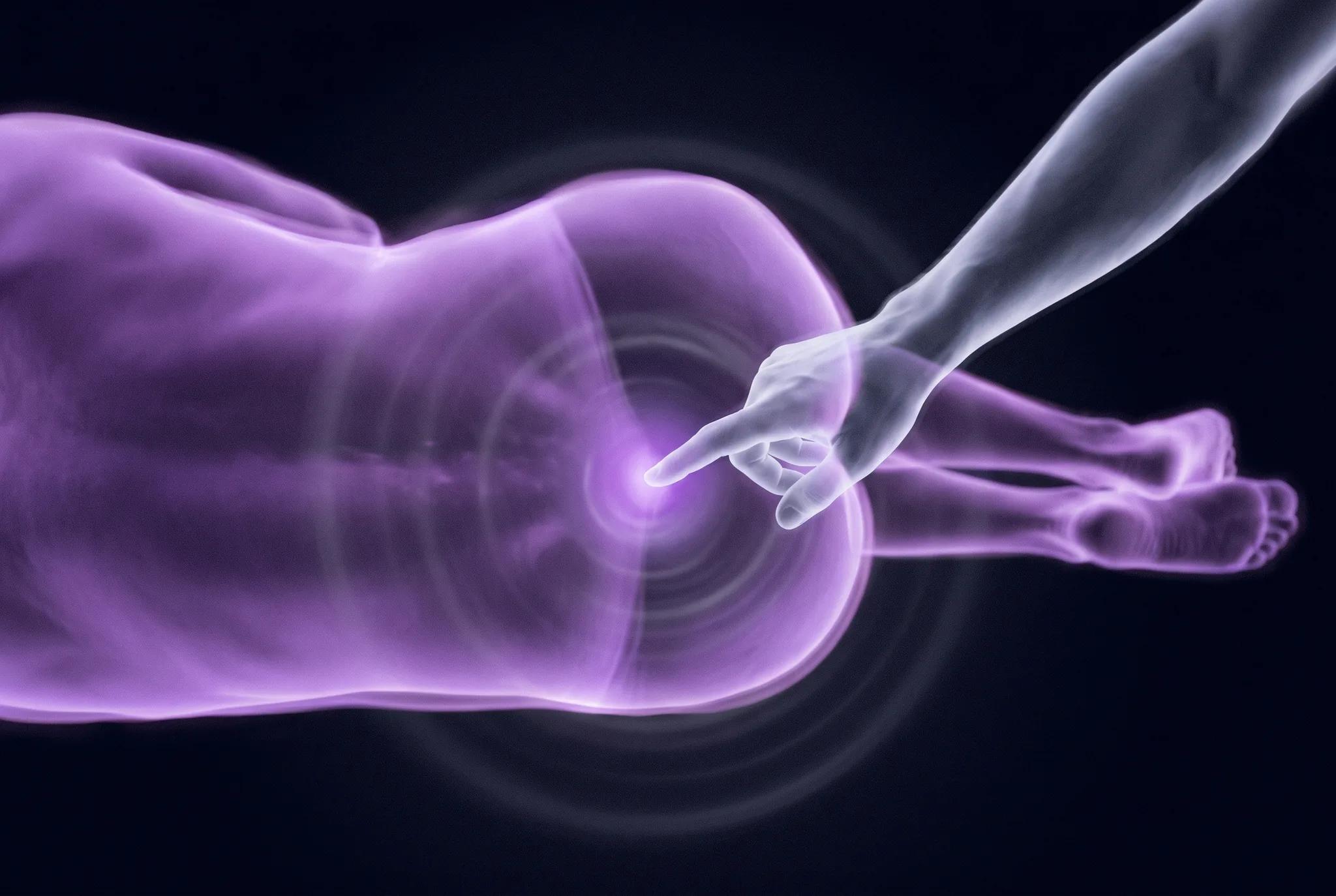
There are two rings of muscle at the anus. The outer one is under your control. The inner one is smooth muscle, involuntary, and supplies about 80% of the closure at rest. Evidenced You cannot decide to open it, and straining against it tightens the outer one. What you can do is stop fighting: soften the outer ring, breathe out, and wait, because the inner ring relaxes on its own in response to gentle, steady pressure from inside. That is a reflex, and it is measured routinely in clinics. Evidenced Stop at the first resistance, wait for it to let go, and only then continue. Pushing through does not speed it up. Waiting does.
Positions
A trial of 200 men examined in four positions found no difference in what the examiner could find, in how much of the gland was reached, or in how much it hurt. Evidenced For a finger that is not yours, position is about comfort. For your own hand, position is about whether your wrist can make the angle at all, and here the clinical data run out and practice takes over. Each position below says what it changes and who it is for.
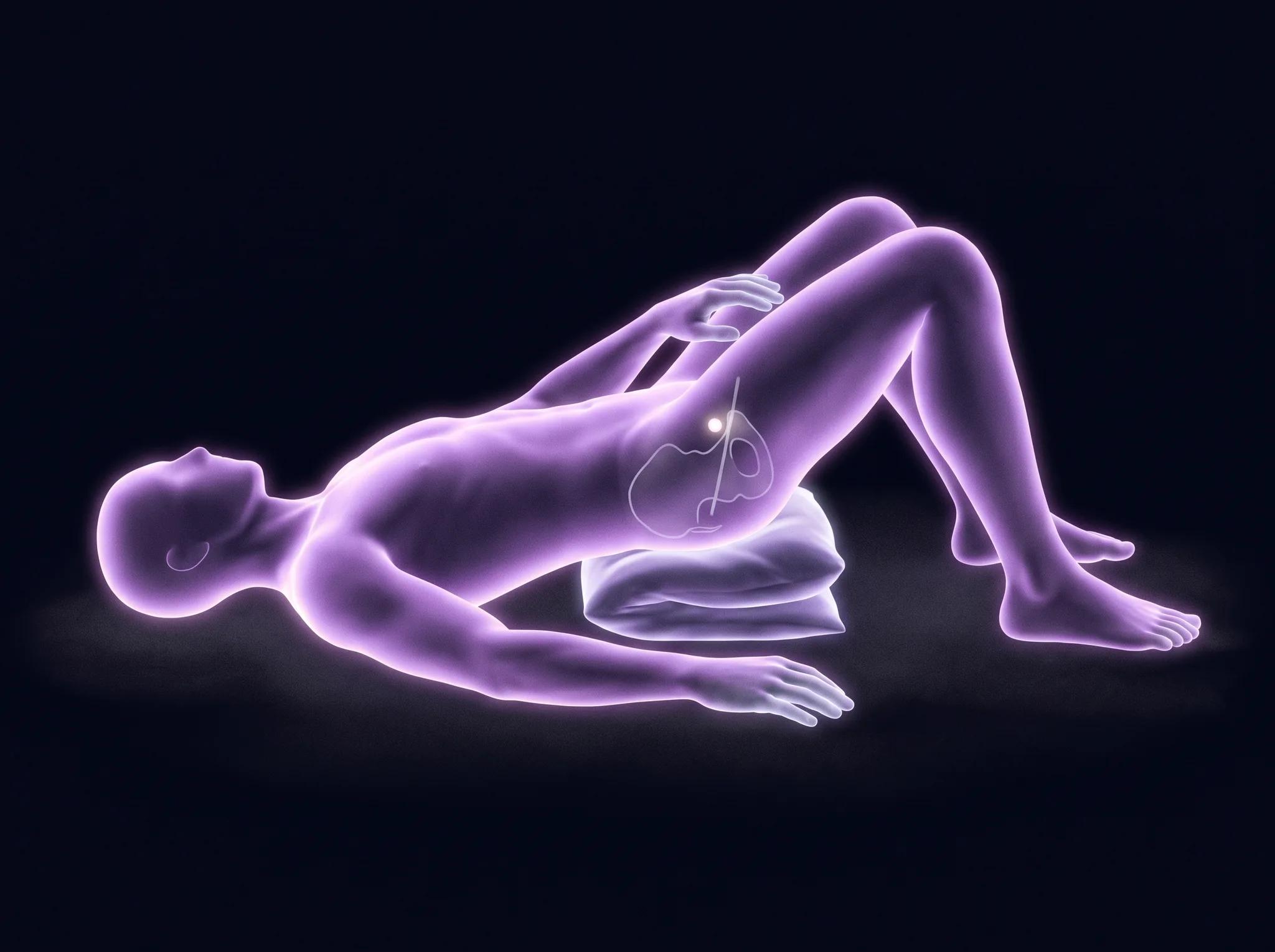
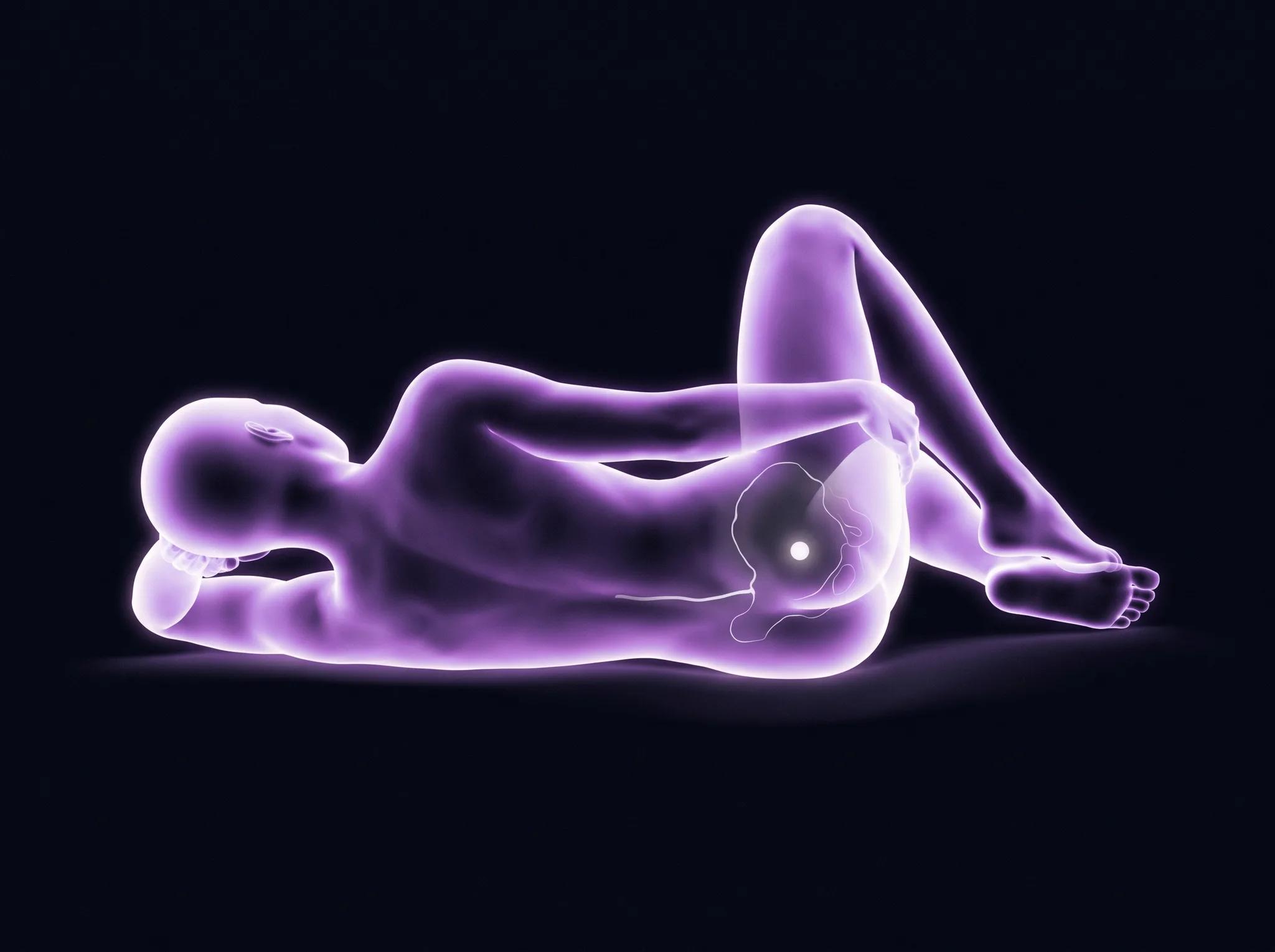
01 / 05Either
On your back, knees up, a pillow under the hips
EvidencedThe pillow tilts the pelvis so the entrance faces upward and the gland lies almost directly above it from between the legs. This is the position 63% of urologists prefer to examine in, and the natural one for a partner: their palm faces up and their curled finger points at your navel. For your own hand it is the hardest reach, because the wrist has to fold back on itself. Expect to touch the lower tip rather than the body of the gland.
Good for a partner, and for anyone who wants to see what is happening. Poor for reaching yourself. If you use it alone, the pillow is not optional, and a tool with a handle does what the wrist cannot.
02 / 05Either
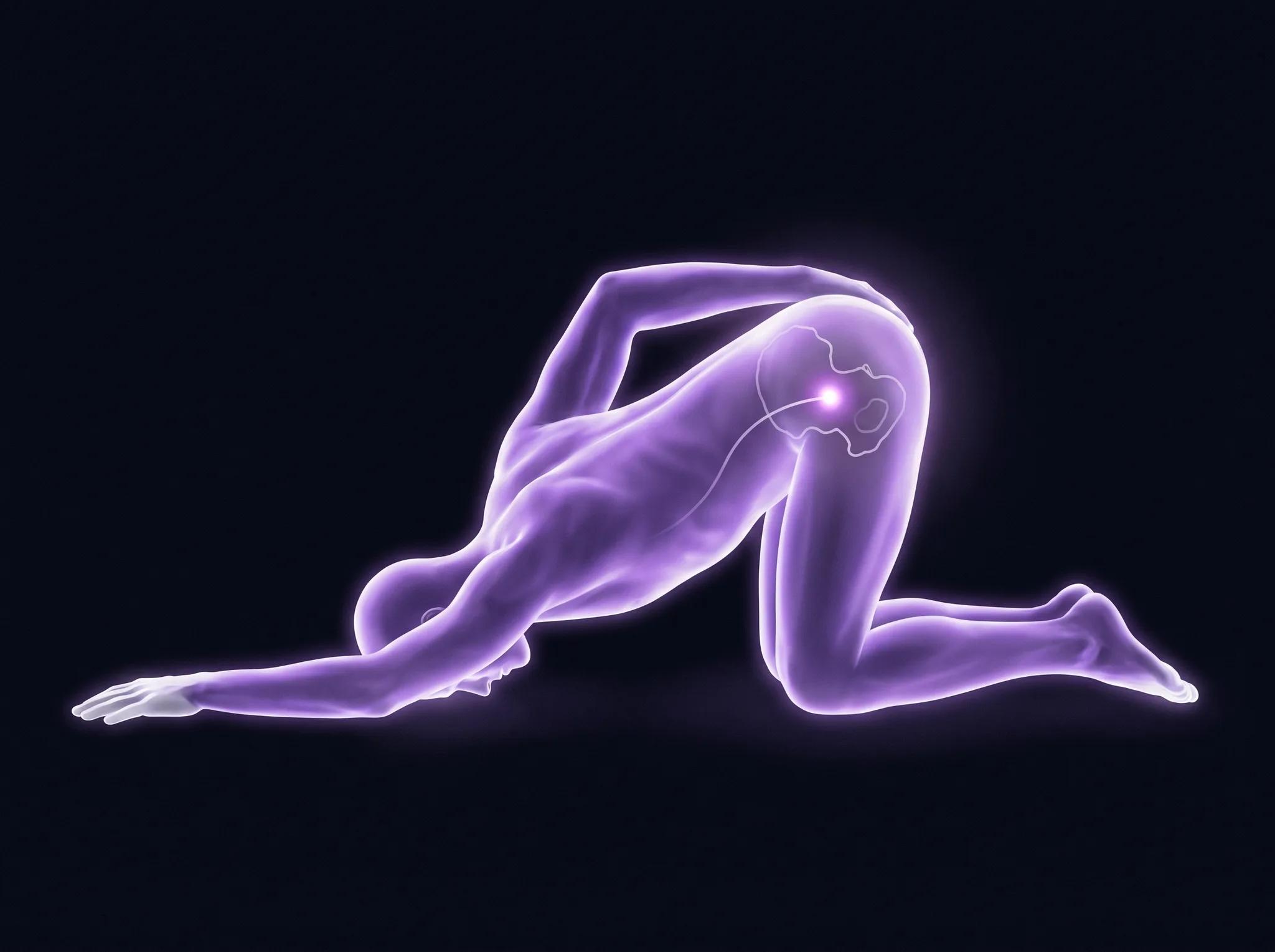
On your side, knees drawn up
EvidencedThe clinical default, and the position 43% of first-time patients choose. Drawing the knees up relaxes the belly and softens the pelvic floor. Your upper arm reaches back over the hip, which is a shorter and easier reach than from the front. Comfortable enough to stay still in for a long time, which is what this practice rewards.
The best all-round position for a first attempt on your own. The reach is real, the pelvic floor is as relaxed as it gets, and there is nothing to hold up. The practice community and the clinical texts agree on it, which does not happen often.
03 / 05Your own hand
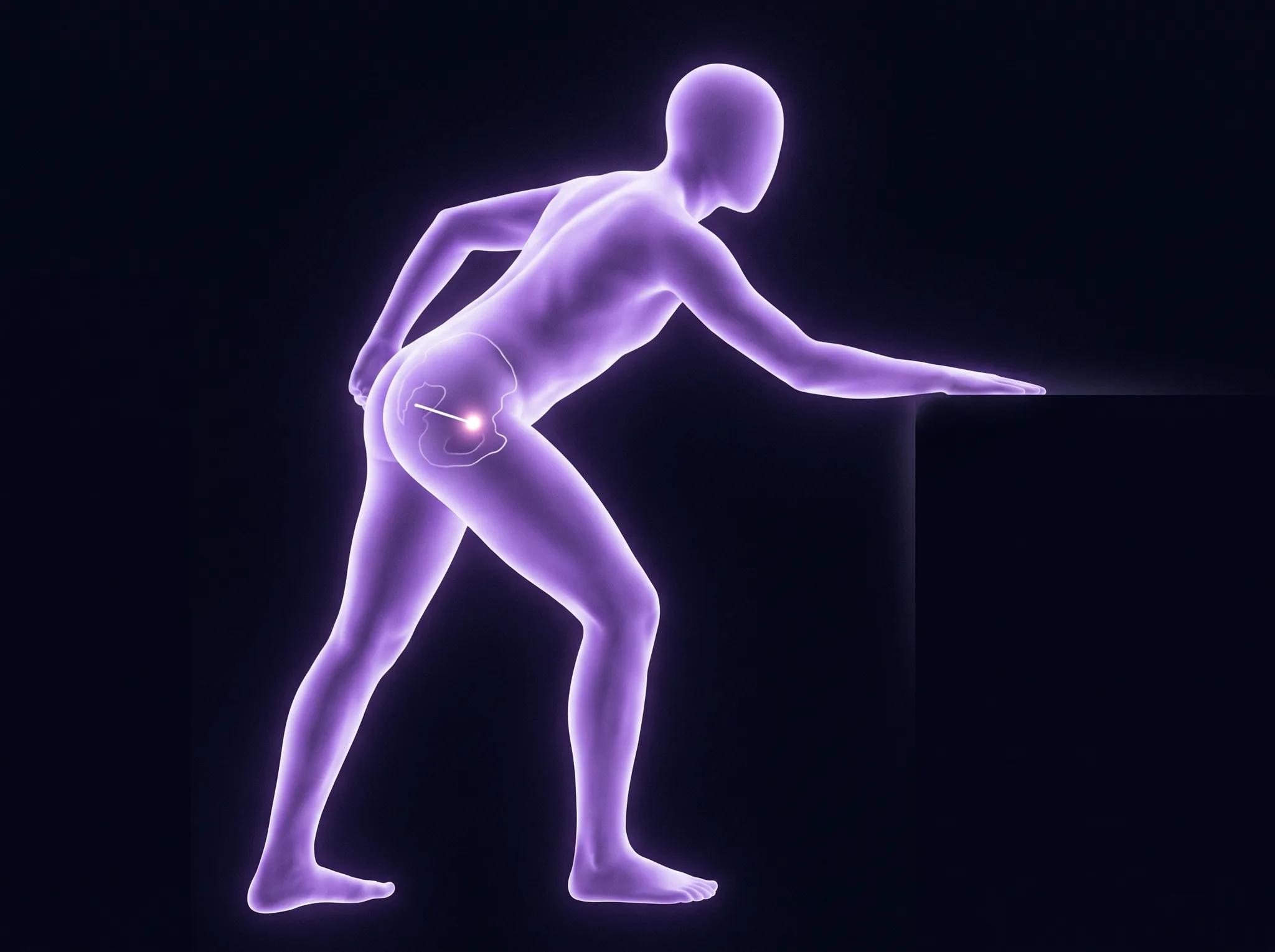
Kneeling, chest down, hips high
ExperientialGravity drops the abdominal contents forward and takes their weight off the pelvic floor; the arm reaches back between the thighs or around the hip with the wrist almost straight. Most practitioners report it as the first position in which they reached the gland properly. Hard to stay still in for long, so use it to find, and then move.
The reach position. Find the gland here, learn what the depth and angle feel like, then roll onto your side to stay with it. Keep the chest genuinely down; a half-kneel with a flat back loses the tilt that makes it work.
04 / 05Your own hand
Standing bent forward, or a low squat
EvidencedDeep hip flexion and squatting widen the bend between the anal canal and the rectum, so the two line up more and entry is easier. In the trial this was the fastest position for the examiner and the one with the most bowel urgency, which is worth knowing before you begin. It is the easiest position in which to seat a tool before lying down.
Not a position to spend time in. It is a way to get something into the right place with the canal at its straightest, after which you lie down. The urgency it produces is the widened angle doing its ordinary job; empty out first and it is a non-event.
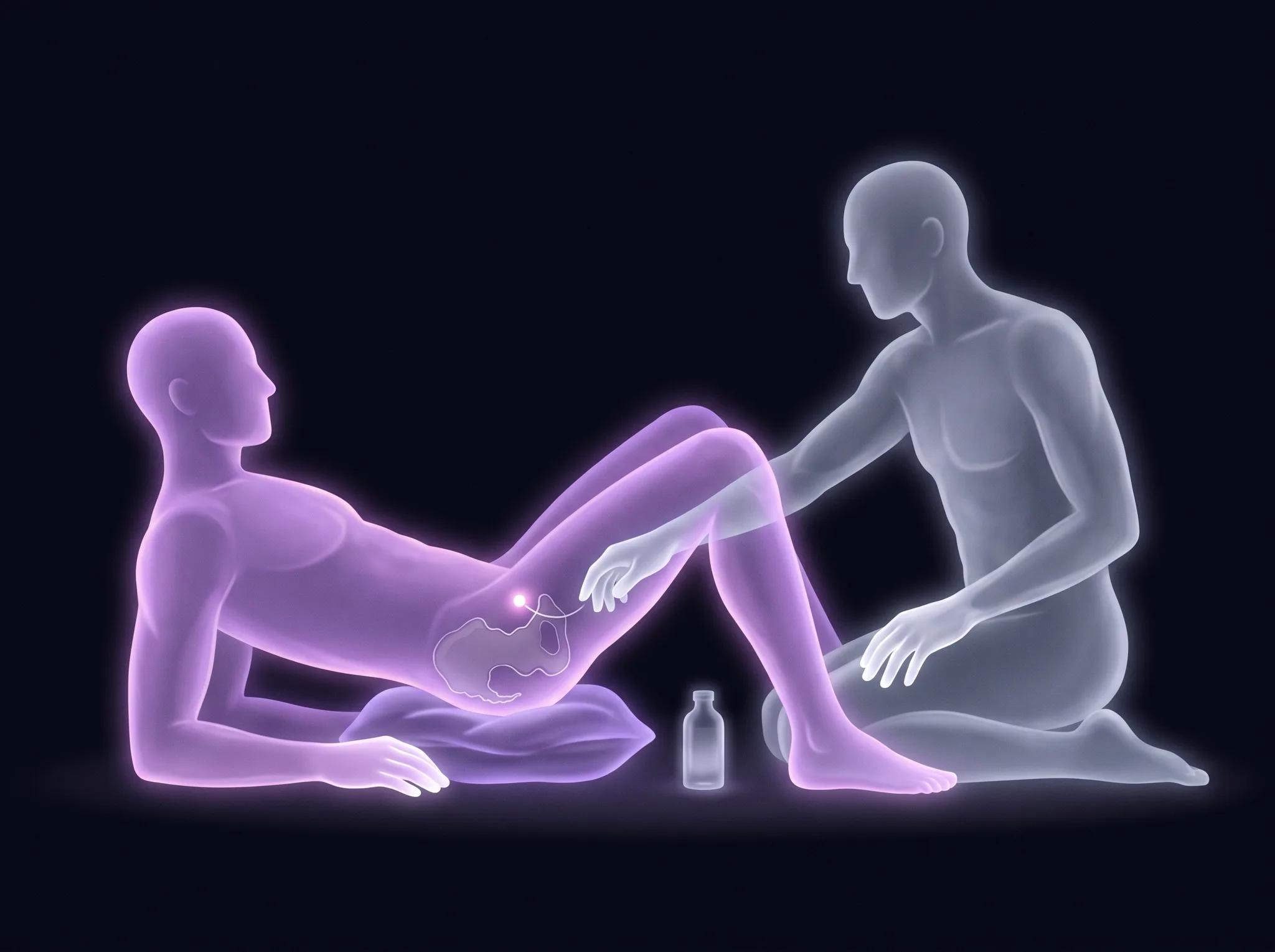
05 / 05A partner
A partner between your legs
ExperientialTheir forearm has the angle your wrist does not, and from between your legs the curl toward your navel is a natural movement of their hand. The lower tip of the gland is right there at about five centimetres. Slow, led by your breath and your words rather than their curiosity, and with the same wait at the door.
Say what you feel out loud, including "nothing" and "I need to pee", because they are working blind and those words are the only map they have. The word "more" almost never means more pressure. It means stay.
With a finger, step by step
Empty out
Bladder empty, so the first thing you feel is not the urge to go. A normal bowel movement in the last few hours handles the rest for most people. Douching is not needed for a finger and, done often or hard, irritates the lining.
Nails, hands, glove
Nails short and smooth: the rectal lining is thin and a ragged edge tears it. A glove removes the nail question and the cleaning question at once, and a nitrile glove with lubricant on it is smoother than skin.
Lubricant, more than seems reasonable
The rectum makes no lubricant of its own and its lining is thinner than vaginal tissue. Evidenced Water-based works with everything and dries out, so keep it within reach and reapply. Use it on the entrance, on the finger, and again once you are inside.
Outside first, for longer than a minute
Arousal relaxes the floor and brings blood to the whole pelvis. Rest the fingertip on the entrance without entering. Breathe out slowly and let the outer ring soften. Most of the discomfort people report comes from skipping this.
The first knuckle, and stop
Enter to the first knuckle and do nothing. You are at the inner ring. Wait for it to let go on an exhale; it will, and it will not be hurried. If it has not released within a minute, back out a little and wait there instead.
Past the canal, curl toward the navel
At about four to five centimetres, once the canal is behind the fingertip, turn the pad of the finger toward the front of your body and curl. You are looking for a rounded firmness against the front wall, with a shallow groove down its middle. If you feel nothing, sweep slowly side to side across the front wall, and change the depth a centimetre at a time rather than the pressure.
Arrive, and do nothing
Rest the finger on the gland. No stroking, no pressing harder. Breathe: four counts in, six out. Notice what your body reports, which will be pressure, fullness, warmth or an urge, somewhere in the pelvis. That is the map filled in. A few minutes is plenty the first time. Withdraw slowly, on an exhale.
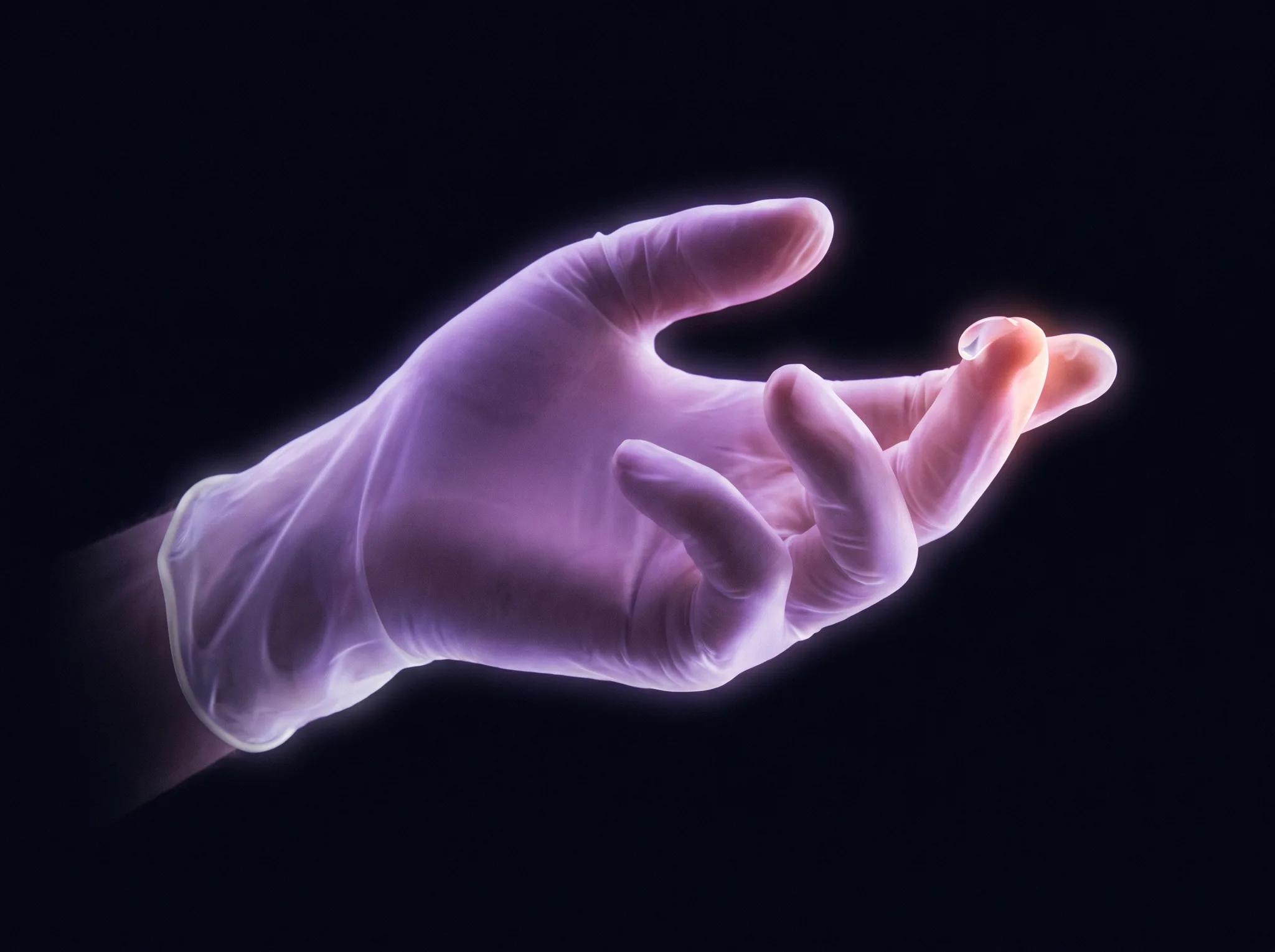
The index finger curled in a beckoning arc, pad forward. The curl is what brings the fingertip onto the front wall.
More lubricant than looks necessary. It is what makes the wait at the door tolerable.
Pressure, not friction. The gland responds to steady pressure and slow movement, and the rectal wall responds to friction with irritation. In-and-out movement is the wrong instinct here, carried over from other kinds of touch. The practice community's most repeated finding is that less works better: smaller, slower, stiller. Experiential
From the outside
You can load the lower end of the gland without entering at all. The perineum is the soft floor between the back of the scrotum and the anus. Press two fingertips into it, midway along, upward and slightly forward toward the navel, and you are pressing through about four centimetres of tissue: the bulb of the penis first, then the pelvic floor, then the region of the gland's lower tip.
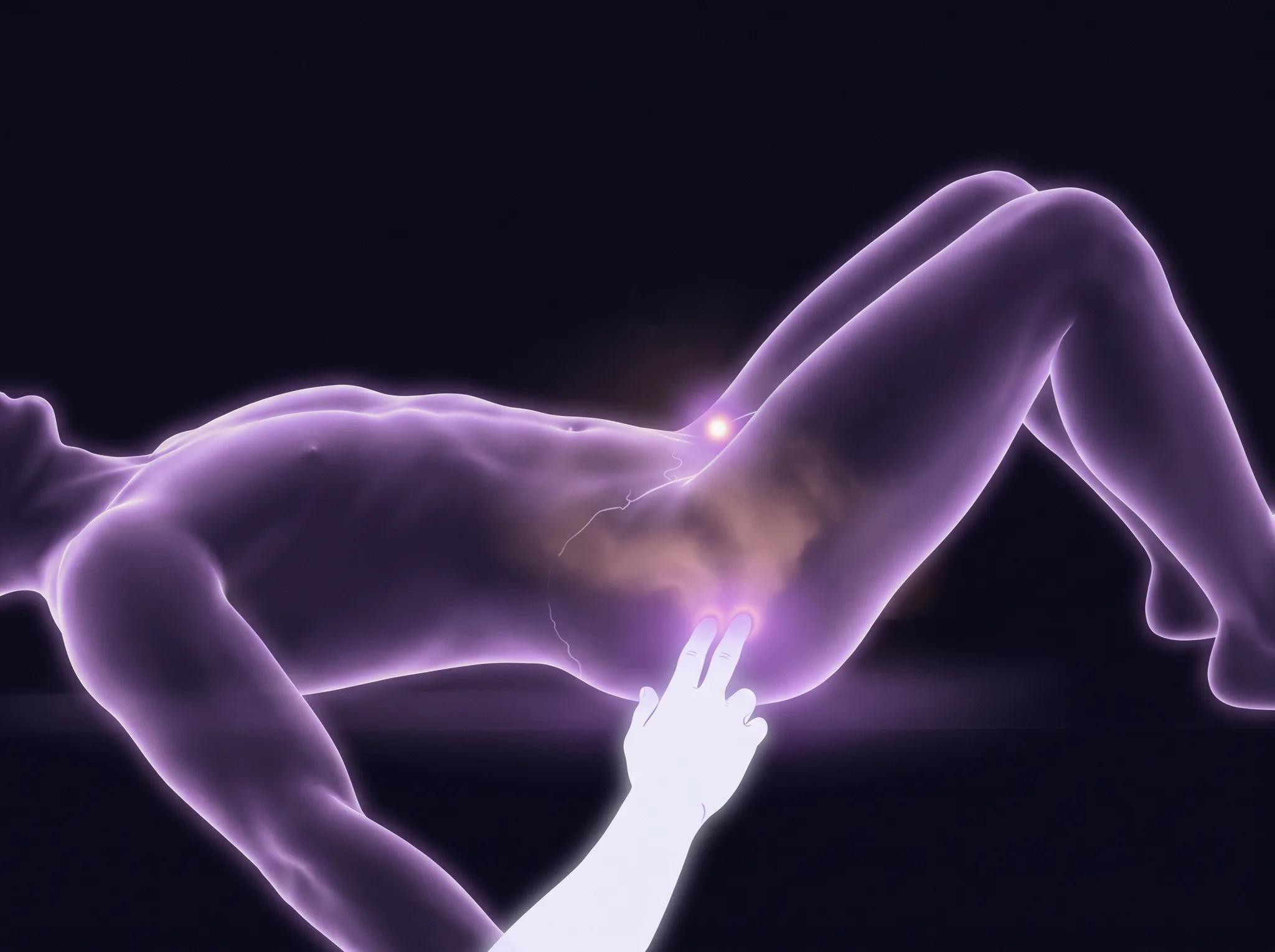
You will not find a shape this way; you are looking for a deep, dull fullness rather than surface touch. Experiential Hold light pressure and breathe. The "million-dollar spot" of internet folklore is this region, and the folklore's error is the word spot. Folklore It is a broad area, and it responds to broad, steady pressure, not to hunting.
Tools, and why they are shaped like that
Run the numbers again. The far end of the gland is a median 10 cm in, index fingers are 7 to 9 cm, and the approach curves forward. A finger reaches the whole gland in about 3% of men. A tool with 10 cm of insertable length and a forward curve reaches what a finger cannot, holds an angle a wrist cannot, and needs no arm to keep it there. That is what they are for. They are not for size, and the community that has used them longest is unanimous that size works against you.
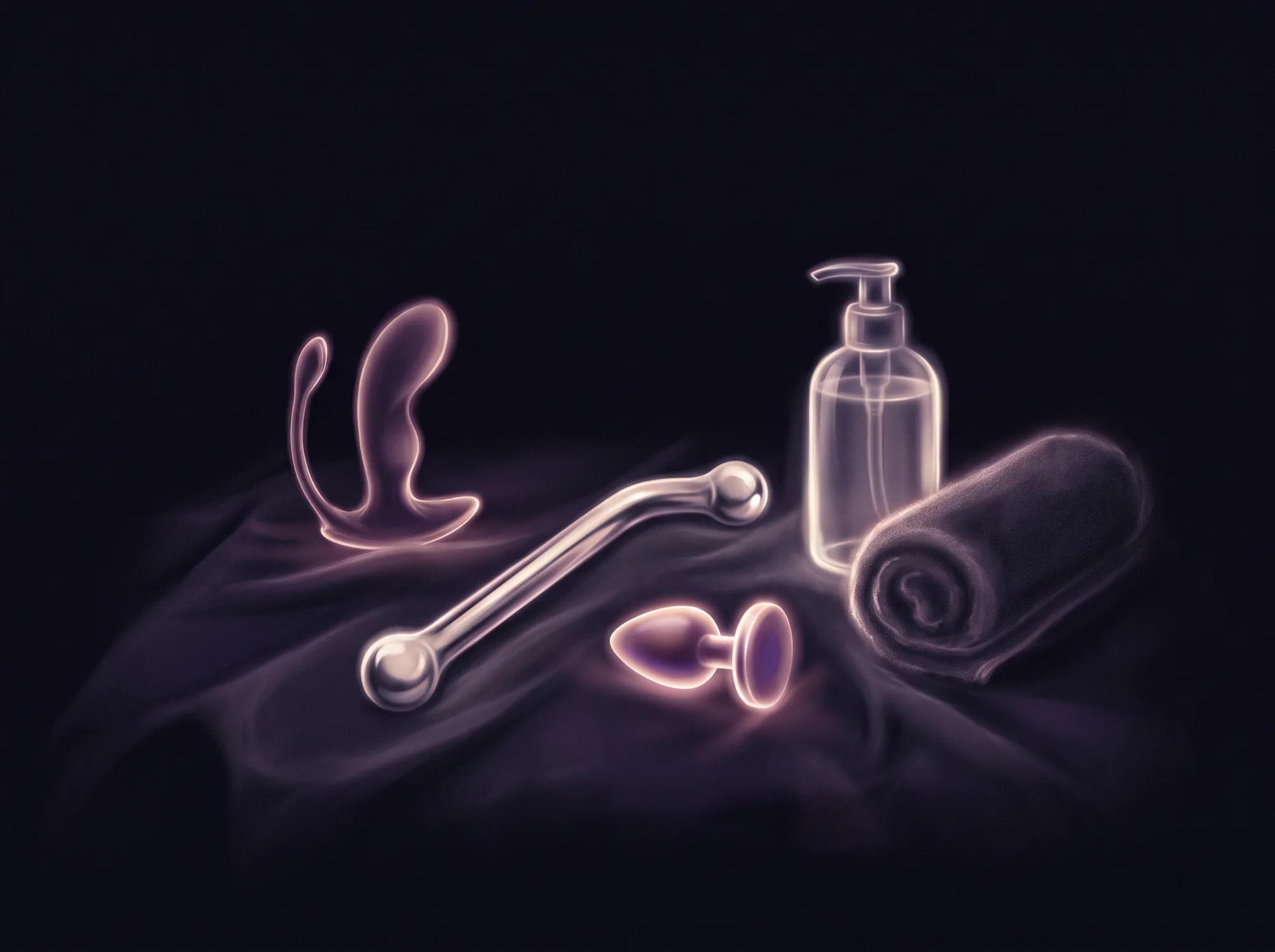
Three shapes, three jobs.
A curved massager is small, with a head that curves forward onto the front wall between about 5 and 8 cm, a flared base that stays outside, and a thin arm that rests on the perineum. It is designed to be moved by your own pelvic floor rather than by hand: a gentle contraction rocks the head against the gland, a release lets it settle. Hands-free, still and small is the design intent, and the practitioners who built the vocabulary around it report that effort and size both suppress the response. Experiential
An angled wand is rigid, heavy, and bent so that the far bulb aims forward. It reaches past where a finger stops and gives very exact pressure, and the weight does part of the work. It needs a hand on it at all times. The outer bulb is both the handle and the stop.
A plug fills the anal canal and the lowest part of the rectum, three to four centimetres, and does not aim at the gland at all. It is useful for learning to relax around something that is staying put. It is not a finding tool.
What people get wrong
Most of what is written about the prostate is folklore in the specific sense that it is repeated everywhere and is either wrong or unsupported. The corrections, each with its status:
- "Two inches in, straight up." Folklore The lower tip is about 5 cm in and the far end about 10. Both vary by several centimetres between people and grow with age, and straight in follows the rectum toward the spine.
- "It's the male G-spot." Folklore A borrowed metaphor that implies a small surface spot. The prostate is a walnut-sized organ behind a wall, sensed through visceral nerves as pressure and fullness. The metaphor sets up the failure of pressing once and feeling nothing.
- "Press it and you'll feel it immediately." Folklore First contact usually registers as pressure or an urge to urinate. Distinct pleasure is learned over weeks in almost every account, a process practitioners call rewiring. Experiential The one peer-reviewed review of prostate-induced orgasm says plainly that the mechanism is not yet described.
- "If you can't reach it you're doing it wrong." Folklore Urologists reached the whole gland in 3% of men. Reach is finger length and gland position, not skill.
- "Bigger, harder, faster." Folklore Every strand of the practice reports the opposite.
- "Massage prevents cancer, drains toxins, or cures prostatitis." Folklore No evidence for any of it. Massage is actively dangerous in acute bacterial prostatitis. Evidenced
- "The urge to pee means you are doing it wrong." Folklore It means you are on the gland, near the bladder. It passes.
When it does not work
Very common, and rarely a sign that anything is wrong.
I felt the gland with my finger but nothing else happened.
That is the expected first outcome, not a failure. Your finger is a precision instrument and your pelvis is not. Visceral sensation is slow and vague, and the pleasure people describe is learned over repeated sessions rather than found. The useful work of the first attempt is the map: you now know the depth, the angle, and what the resistance at the door feels like when it releases. Go back to it another day, do less, and pay attention to pressure and warmth rather than waiting for a spot to light up.
I could not reach anything firm at all.
In order of likelihood: you are going straight in rather than curling forward; you are not deep enough, still in the canal; your wrist cannot make the angle in the position you are in; or the pelvic floor is tense enough that everything feels the same. Try kneeling with the chest down, curl earlier and more firmly toward the navel than seems right, and if that fails, the honest answer is that your finger may not reach your gland comfortably. That is what the curved tools are for.
It just felt like I urgently needed to pee.
Expected. The upper end of the gland sits against the neck of the bladder, and pressure there registers as urgency first. Empty your bladder beforehand, and when it happens, stay still and breathe out. It usually reorganises into something else within a minute or two once the initial signal settles.
It hurt.
Stop. Pain here is information, not something to work through. Nearly always it is too little lubricant, too fast at the door, or tension. Sharp pain, burning, a tearing feeling, or any bleeding means stop for the day. If it happens every time, read the safety note below.
How long should the first time take?
Longer than you expect at the door and shorter than you expect once you arrive. Ten to twenty minutes of unhurried time is enough for a first map, and a few minutes of contact is plenty. Treating it as something to achieve in one sitting is the reliable way to make it unpleasant. Two or three short attempts a week, over weeks, is what practitioners describe, and the sessions where nothing seems to happen are frequently the ones that build the capacity.
Does being aroused first help?
Almost everyone says so, and the mechanism is plausible: arousal brings blood to the pelvic organs and relaxes the floor, and the gland is a vascular organ. No study has measured whether the prostate is easier to find aroused than not, so this is marked as practitioner report. In practice, warm up first. Nothing is lost by it.
Every claim in this guide
| Claim | Status | Basis |
|---|---|---|
| The lower tip of the prostate is about 5 cm in from the anus; the upper end about 10 cm. | Evidenced | Ultrasound in 95 men: anal verge to apex median 5 cm (range 3 to 7.5); to base median 10.3 cm (range 7.3 to 15.7). Median age 64, so the far end sits nearer in a younger, smaller gland. Koulikov et al., ISRN Urology 2012 |
| An index finger reaches the lower tip in most men and the whole gland in almost none. | Evidenced | Examiners with 7 to 9 cm index fingers (median 8.25) reached the apex in 93.7% of men, half the gland in 66.3%, three quarters in 23.2%, the whole gland in 3.2%. Koulikov et al., ISRN Urology 2012 |
| A larger gland sits farther in. | Evidenced | Anal-to-base distance correlated with ultrasound volume, r = 0.72. Koulikov et al., ISRN Urology 2012 |
| A normal young adult prostate weighs about 20 g and grows only if benign enlargement develops, which about half of men have by their fifties. | Evidenced | 20 ± 6 g at ages 21 to 30. Histological BPH in about 8% in the fourth decade, 50% at 51 to 60, 80 to 90% over 70. Berry et al., J Urol 1984 |
| The gland feels smooth, firm and rubbery, about 3.5 cm across, with a shallow central groove, and bulges about 1 cm into the rectum. | Evidenced | Standard description of the normal gland on rectal examination. StatPearls, Rectal Exam |
| The anal canal is 3 to 4 cm long; above it the rectum bends back to follow the sacrum. | Evidenced | Standard anatomy. The anorectal angle is about 100 to 110 degrees at rest and widens with squatting and hip flexion. StatPearls, Anal Canal |
| The inner anal sphincter is involuntary and supplies about 80% of resting closure; it relaxes by reflex to steady pressure. | Evidenced | Internal sphincter: smooth muscle, involuntary, about 80% of resting pressure. External: striated, voluntary, about 20%. Rectoanal inhibitory reflex relaxes the internal sphincter on rectal distension. StatPearls, Anal Canal |
| The prostate and the rectum above the anal canal are supplied by visceral nerves that report pressure and stretch, not fine touch, and refer sensation elsewhere. | Evidenced | Prostate innervated from the inferior hypogastric plexus (autonomic, visceral afferents). Somatic sensation ends at the dentate line of the anal canal. StatPearls, Inferior Hypogastric Plexus |
| The fingertip, by contrast, feels the gland distinctly. | Evidenced | The finger is somatically innervated skin; the pudendal territory of the anal canal is likewise sharply tactile. StatPearls, Pudendal Nerve |
| An urge to urinate on first contact is expected, because the base of the gland lies against the neck of the bladder. | Evidenced | Anatomical relationship. That the urge passes within a minute or two is a practitioner report. StatPearls, Rectal Exam |
| Position does not change whether an examiner can reach the gland. | Evidenced | 200 men examined lying on the side, on the back, standing, or squatting: no difference in findings or in incomplete palpation (0 to 4.2%). Urologists preferred the back (63.4%); first-time patients the side (42.7%). Standing was fastest; squatting produced more bowel urgency. Romero et al., Int Braz J Urol 2011 |
| For your own hand, position decides what you can reach. | Experiential | The clinical data assume an examiner facing the patient. Self-reach is limited by wrist and shoulder range, and practitioners consistently report kneeling and side-lying as the workable positions. Not measured. |
| The gland is easier to find when you are aroused. | Experiential | Plausible: arousal brings blood to the pelvic organs and the gland is vascular. No study measuring its size or firmness at rest versus aroused was found. |
| Pressing up through the perineum from outside stimulates the gland. | Experiential | The region of the apex lies above the perineal body and pelvic floor, through roughly 4 cm of tissue, and many people find the pressure pleasant. No study of what it does to the gland was found. It is a region, not a single spot. |
| Distinct pleasure from the gland is learned over weeks, not found in a session. | Experiential | Universal in practitioner accounts, which call it rewiring. The one peer-reviewed review says the mechanism of prostate-induced orgasm is not yet described. Levin, Clinical Anatomy 2018 |
| Small, still, and less is more. | Experiential | The most consistent finding of the practice community: small tools, pressure without thrusting, effort suppresses the response. Not trialled. |
| Anything inserted must have a flared base or a way to retrieve it. | Evidenced | The rectum draws objects inward with no natural stop. Retained objects are a routine emergency presentation. |
| Numbing products are unsafe here. | Evidenced | They remove the pain signal that is the only warning of tissue damage. Consensus safety guidance. |
| Prostate massage is dangerous in acute bacterial prostatitis. | Evidenced | Contraindicated: risk of spreading infection into the blood. StatPearls, Benign Prostatic Hyperplasia |
| The prostate is the male G-spot, a button that responds at once. | Folklore | A metaphor that implies a small surface spot with instant tactile pleasure. The gland is a walnut-sized organ behind a wall, sensed through visceral nerves as pressure and fullness. |
| Two inches in, straight up. | Folklore | Depth varies by several centimetres between people and with age, and straight in follows the rectum toward the spine, away from the gland. Koulikov et al., ISRN Urology 2012 |
| Massage prevents prostate cancer or drains toxins. | Folklore | No evidence for either. Not a treatment for anything, and contraindicated in acute infection. |
The short version
About five centimetres in, curled toward the navel, not straight up. Wait at the door for the ring you do not control; it opens on its own. Your finger reaches the lower half of the gland and usually not the rest, and that is geometry, not skill. Kneeling or side-lying for your own hand, on your back for a partner's. Pressure and stillness, never friction. Your fingertip will find it long before the rest of you does, and the vague pressure your body reports is the thing itself, not a sign that you missed.